
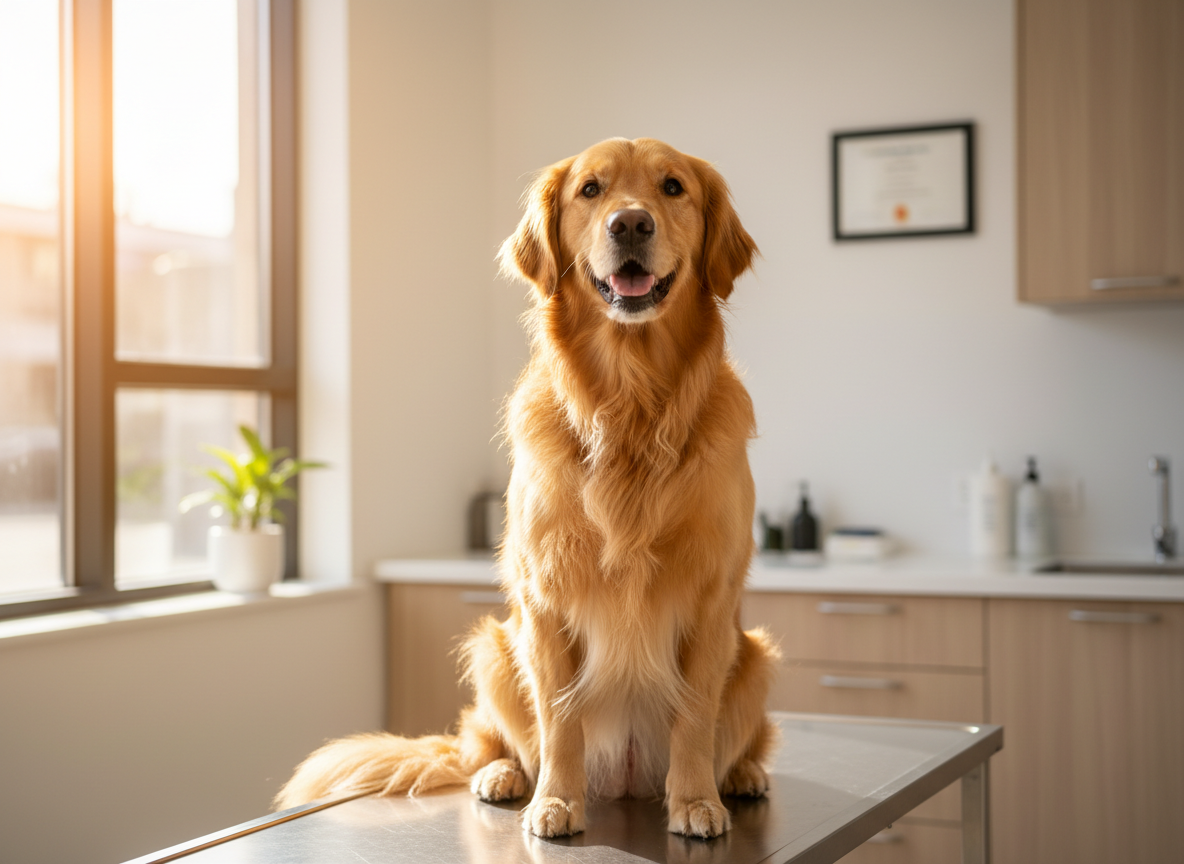
How to Talk to Your Vet

Veterinarian · Founder of Cykeldyrlægen, Copenhagen
Key Takeaways
- ✓ You do not need medical knowledge to be helpful
- ✓ Focus on describing what you have seen, not diagnosing
- ✓ Specific observations help your vet more than vague concerns
- ✓ It is okay to be honest about uncertainty
Clear communication helps your pet get the best care
When something feels off with your pet, it is completely natural to feel worried.
You may notice that your dog is “just not acting like themselves,” or that your cat seems quieter than usual. But when you finally arrive at the veterinary clinic, it can suddenly become difficult to explain exactly what you have noticed.
Many pet owners leave an appointment thinking:
- I forgot to mention that
- I should have asked that question
- I don't know if I explained it clearly enough
The good news is this: you do not need medical knowledge to be helpful.
Your veterinarian depends heavily on the observations you bring. The way you describe what has changed can make a real difference in how quickly the problem is understood and what happens next.
Your observations matter more than you think
Pets cannot tell us what hurts.
In practice, I've seen owners lose ten minutes of a fifteen-minute appointment because the stress of the room made them forget the very details they came to share. It's not a memory problem — it's a pressure problem.
That means your veterinarian often relies on history and observation to build the clinical picture.
This is called the anamnesis: the story of what has been happening.
Sometimes the most helpful details are not dramatic symptoms, but patterns such as:
- when it started
- whether it is getting better or worse
- how often it happens
- what changed beforehand
- appetite, thirst, sleep, or behavior changes
Instead of worrying about saying the “right” thing, focus on describing what you have seen.
For example, rather than saying:
“My dog seems sick.”
Try:
“He started vomiting yesterday evening, three times during the night, and today he has not wanted breakfast.”
That kind of detail helps your vet much more.
Focus on what changed
A very helpful way to talk to your vet is to think in terms of change.
Ask yourself:
- What is different from normal?
- When did I first notice it?
- Has it changed since then?
- Is it happening more often?
Examples:
- “She is drinking much more water than usual.”
- “He is limping after rest but seems better after walking.”
- “She normally eats immediately, but today she sniffed the food and walked away.”
Specific observations are more useful than conclusions.
For example, say “drinking more than usual” rather than “I think it is diabetes.”
Your job is not to diagnose.
Your job is to observe.
That is incredibly valuable.
Be honest about uncertainty
It is perfectly okay to say:
“I'm not sure when it started.”
or
“I may be overthinking this, but something feels different.”
Veterinarians hear this every day.
You do not need a perfect timeline.
Even approximate information helps.
For example:
- “sometime this week”
- “after the walk yesterday”
- “over the last month”
Honesty is always better than guessing.
Mention patterns, not isolated moments
One symptom alone may not mean much.
A pattern often means everything.
Try to notice things like:
- frequency
- duration
- triggers
- progression
Examples:
- “It only happens after eating.”
- “The coughing is worse at night.”
- “He seems stiff in the mornings.”
- “The scratching increases after being outside.”
These patterns help your veterinarian think clinically.
Bring your questions
Many owners focus so much on explaining symptoms that they forget to ask what they need.
Write your questions down before the appointment.
For example:
- What do you think might be causing this?
- What should I monitor at home?
- When should I come back?
- What signs would make this urgent?
- Is there anything I should change in food or routine?
It is completely okay to bring notes.
In fact, it often makes the appointment much more useful.
You and your vet are a team
The best care happens when pet owners and veterinarians work together.
You know your pet's normal behavior.
Your veterinarian knows how to interpret the medical picture.
Those two perspectives together create the strongest foundation for care.
That is why clear communication matters so much.
You do not need to sound medical.
You only need to describe what you have seen as clearly as possible.
Because when communication improves, consultations improve, and that helps your pet.
Final thought
If you ever feel flustered before an appointment, pause for a moment and ask yourself:
What changed, when did it start, and what have I noticed?
That alone can transform the conversation.
And often, it helps you feel calmer too.
Related reading
Want a simple way to organize your thoughts before the visit?
Pause First™ is a veterinarian-designed preparation tool that helps you gather your observations so the conversation feels clearer and more useful.
Get the Free Guide